
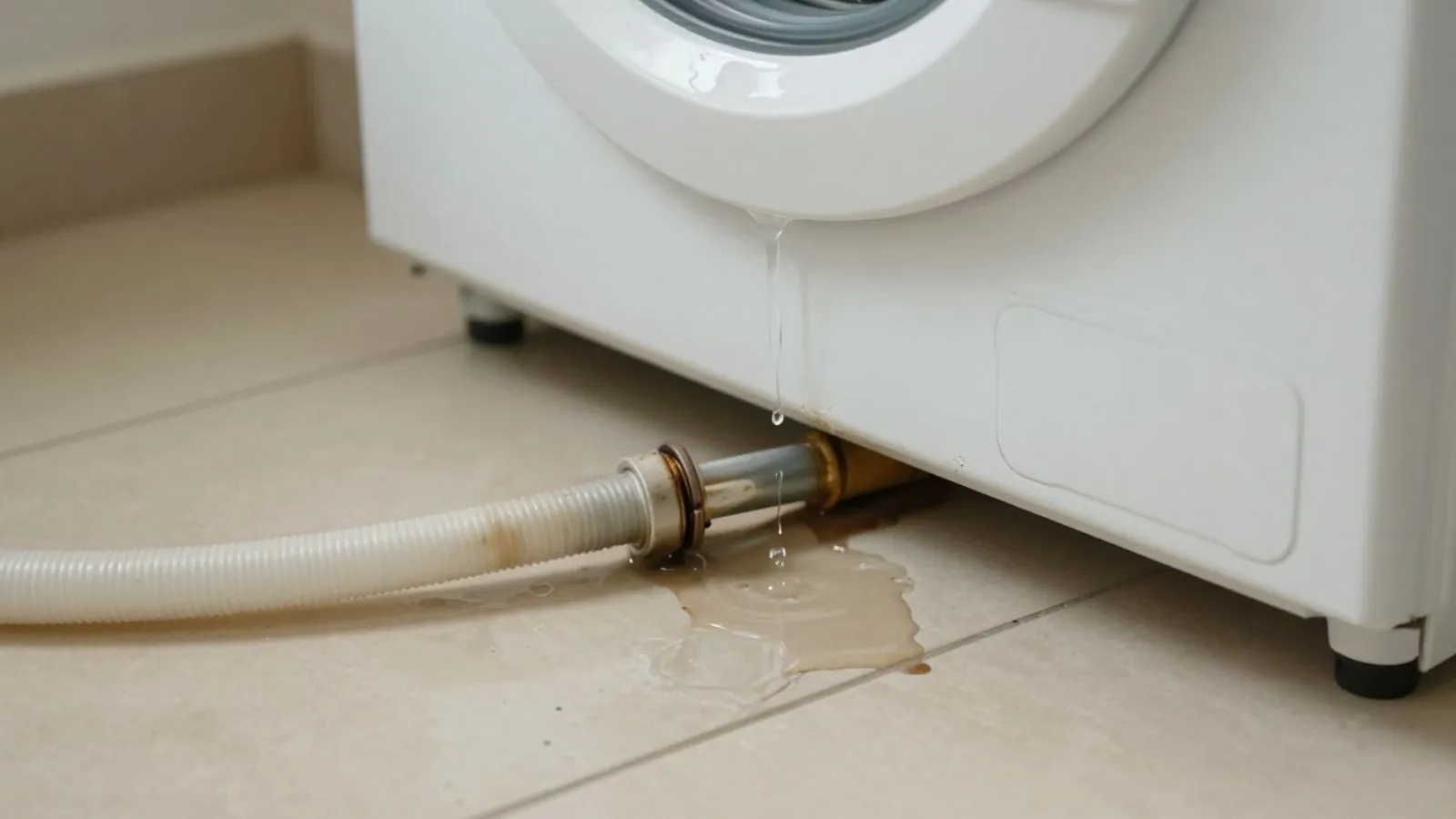
Which household appliances leak and why
Appliances connect to the house through rubber or braided hoses, small valves and drain standpipes, and each connection ages. A washer hose can bulge and burst under constant line pressure. A dishwasher door gasket or drain loop can fail. A refrigerator's ice-maker tube can split behind the unit, where nobody looks for months. Humidifiers and water softeners add more fittings, and each one can drip.
The U.S. Census Bureau estimates that about 69 percent of Draper housing units are owner-occupied, and it puts the median owner-occupied home value near $785,000. For an owner at that value, a dripping valve behind the washer is worth taking seriously, since the repair scope can grow far beyond a replacement hose. A cabinet-side leak is a different case, covered on the kitchen water damage page.
Slow leaks and what they leave behind
| Appliance | Common failure | How you find out |
|---|---|---|
| Washing machine | Burst supply hose or overflowing drain standpipe | Water on the laundry floor or a stained ceiling below |
| Dishwasher | Loose supply fitting, drain hose or door seal | Soft or lifting flooring next to the kitchen sink |
| Refrigerator | Cracked ice-maker line or loose saddle valve | Musty smell or cupped floor boards near the fridge |
| Humidifier | Overflow or a leaking furnace-side line | Damp carpet or stained wall near the unit |
| Water softener | Drain hose, brine line or valve leak | Wet floor in the basement and rust staining |
These leaks are rarely dramatic. Most are found because a floor feels soft, a laminate edge lifts, or a cabinet smells like damp wood.
Safety steps when an appliance is leaking
Stop the water
Close the small shutoff valve behind or beside the appliance. If you cannot reach it, use the main valve.
Unplug with caution
Pull the plug only if the outlet and floor are dry. If water is near the outlet, shut off the breaker and call an electrician.
Move the unit
Pull the appliance out only once the water is off, and watch for heavy tipping. Wear shoes.
Call and photograph
Call (385) 988-9410 for moisture checks and drying. Photograph the hose, valve and any wet flooring.
If water has soaked into a ceiling below the laundry or kitchen, keep people out from under it.
Finding moisture under floors we cannot see
Meter the surface
Moisture meters read floors, baseboards and the wall base around the appliance.
Scan for hidden patterns
A thermal imaging camera shows cooler wet areas under flooring and behind walls.
Extract and lift
Portable extraction units remove standing water. Wet pad or loose flooring comes up where it traps moisture.
Dry in place
Air movers and LGR dehumidifiers dry the subfloor and cavities, with readings logged each visit.
Clean and treat
Affected surfaces get antimicrobial treatment, and the interior repair scope is noted.
Water from a washer or dishwasher drain can count as gray water, meaning it carries soap and soil that make it unsafe to leave wet. ANSI/IICRC S500 is a reference many professionals work from, and EPA guidance says to dry wet materials within 24 to 48 hours. The water damage repair page covers the rebuild once drying is done.
What shapes the cost of an appliance leak job
Leak duration
A day-old leak and a month-old one are very different jobs.
Flooring type
Laminate and engineered wood react faster than tile.
Water category
Gray water adds handling steps.
Subfloor
Wet particleboard or plywood may need more drying.
Rooms reached
Water can run into hallways or the room below.
Appliance location
Laundry rooms upstairs affect ceilings below.
We assess in person and explain scope and price before work starts. Cost follows what is wet, so a moisture map is the first step.
Floor feel soft near an appliance?
Call (385) 988-9410 and we can check for moisture that has not surfaced yet.
Insurance and appliance leaks
Sudden discharge, such as a hose that burst this week, is treated differently from seepage that went on for months. Ask your insurer how it treats long-term leaks and whether the appliance itself is covered. We cannot promise coverage. Keep the failed hose or part if you can, along with photographs, since both show what happened.
Hose replacement, plumbers and licensing
Replacing an appliance connector is usually plumbing work. If you hire someone for a drain or supply change, the Utah Division of Professional Licensing is the agency that handles plumber licensing and answers licensing questions through its plumbing office. We cover the water damage side and leave plumbing to the plumber.
Many leaks come from old rubber hoses, so look for braided lines and replace them on a schedule. Shutting off the washer valves when you travel also helps.
Avoidable mistakes with a damp appliance area
- Drying the surface with a towel and ignoring the floor underneath.
- Sliding a heavy washer through standing water.
- Running the appliance again before the hose is replaced.
- Covering a damp floor with new flooring.
We also serve Sandy and Herriman, where laundry and kitchen leaks look much the same.
Common questions
Are you available for appliance leak water damage in Draper at night or on weekends?
Yes. Dispatch is 24/7 at (385) 988-9410, and same-day response is available when a crew is available. We do not promise a specific arrival time.
How can a slow appliance leak be found?
We use moisture meters and a thermal imaging camera to read floors and wall bases. That shows wet areas you cannot see or feel.
Is washer water safe to leave on the floor?
No. Drain water can be gray water and should not stay in contact with flooring. Call us and keep people and pets away.
Do you replace the broken hose or appliance?
No. A plumber or appliance technician fixes the source. We remove the water and dry the structure.
Will my flooring need to be replaced?
That depends on the material and how long it stayed wet. Readings after extraction help decide what dries and what does not.