
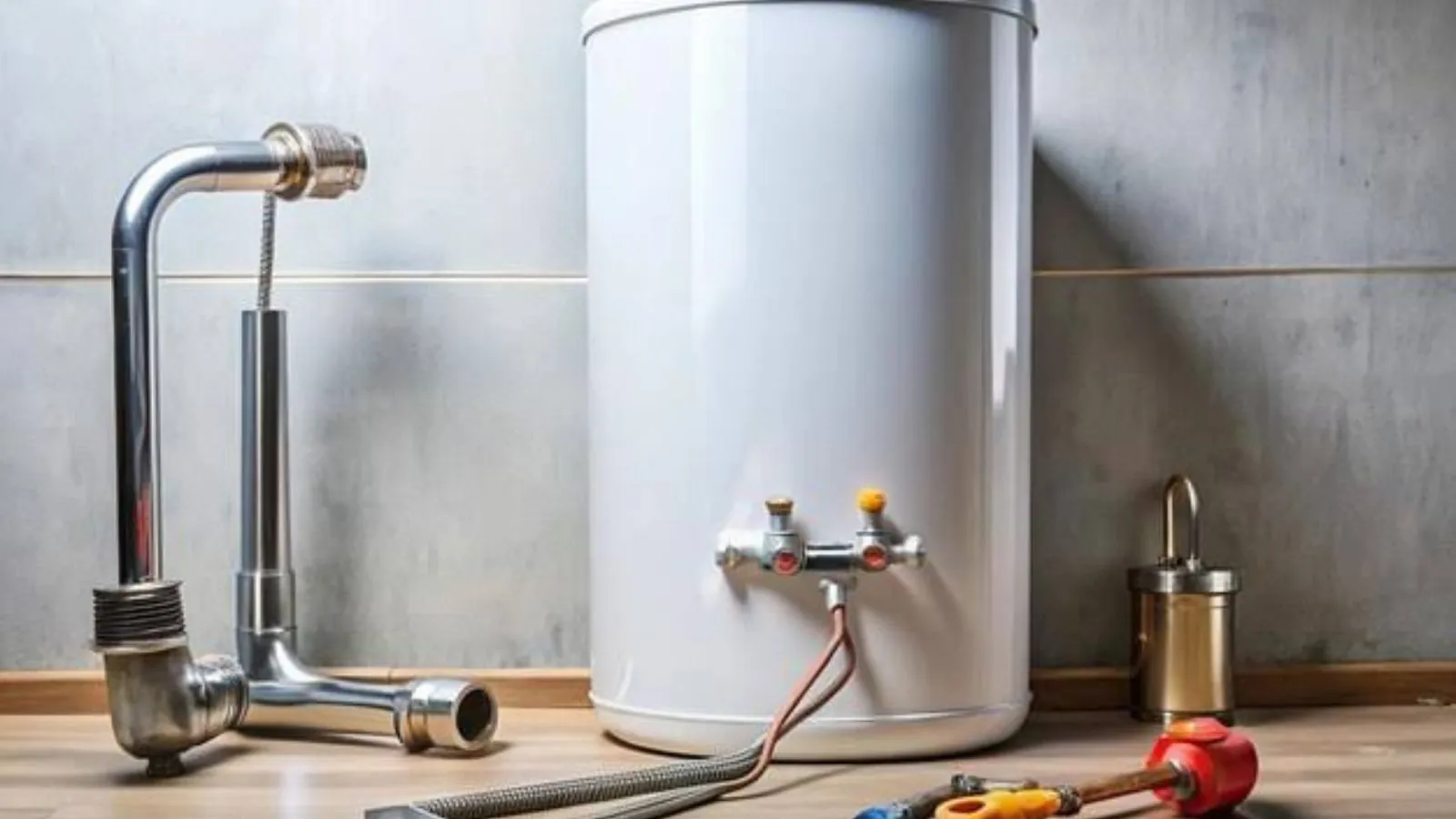
How water heater tanks fail in Draper homes
A storage tank lasts until the steel liner gives out. Sediment settles on the bottom and speeds corrosion, and eventually a pinhole opens near the base or a seam weeps. Other failures are smaller but still wet. A relief valve can discharge when pressure climbs, a supply or gas-side connector can loosen, and a drain valve can drip until the floor underneath is soaked.
Where the tank sits shapes the damage. In many Draper houses it stands in a basement mechanical room, a garage corner or a utility closet, often beside a finished room. Even forty or fifty gallons spreads thin and wide, soaking baseboards, carpet edges and the bottom of the wall, and in a basement it can creep under walls into the next room.
Clues that the tank, not the plumbing, is the source
| What you see | What it points to | Next move |
|---|---|---|
| Puddle spreading from the base | Corroded tank or a failed bottom connection | Shut off the heater and its water supply |
| Pipe near the floor dripping from the relief valve | Pressure or temperature discharge | Do not cap the pipe, call a plumber |
| Wet wall behind the heater | A connector or fitting leak | Close the supply valve above the tank |
| Damp carpet in the next room | Water has migrated from the heater space | Call for moisture mapping |
Water heater safety steps, gas and electric
Shut off the fuel
For electric, switch off the heater's breaker only if the panel is dry. For gas, turn the control to off. If you smell gas, leave the house and call the gas utility from outside.
Stop the water
Close the cold supply valve above the tank.
Stay out of standing water
Do not walk through water that reaches outlets, a cord or the heater itself. Call 911 if you see sparks.
Call and document
Call (385) 988-9410 for water removal and a plumber for the unit. Photograph the tank, the data label and the wet areas.
Leave draining a hot tank to the plumber, because the water can scald.
Pumping and drying after a tank leak
Pump and extract
Submersible pumps clear deep water in a mechanical room. Portable extraction units pull water from carpet and low spots.
Trace the spread
Moisture meters and a thermal imaging camera show how far water traveled under walls and into adjoining rooms.
Remove what cannot dry
Wet baseboards, pad and the bottom of soaked drywall may come out so the cavity can breathe.
Dry with equipment
Air movers and LGR dehumidifiers run until readings match an unaffected room.
Clean and treat
Antimicrobial treatment goes on affected surfaces, and we note the interior repairs left to do.
A tank leak is usually clean water at first, but discolored water changes the handling, so we check before deciding what to save. ANSI/IICRC S500 is a reference many professionals work from, and EPA guidance says to dry within 24 to 48 hours. The emergency water removal page covers the pump work, and structural drying explains the readings.
What makes a tank leak cleanup cost more or less
Time since the leak
A drip found fast stays in a small area.
Finished space
Carpet, drywall and trim cost more to handle than a bare concrete room.
Tank size
A larger tank releases more water when it fails.
Reach
Water can pass through a wall into the next room.
Room layout
Tight mechanical closets limit equipment placement.
Hour of the call
Evening and holiday dispatches are staffed differently.
We inspect first and explain scope and price before work starts.
Tank leaking now?
Shut off the fuel and the supply, then call (385) 988-9410 and we start planning removal.
Insurance questions for a failed water heater
A sudden tank rupture is usually treated as accidental discharge, while a slow leak that went unnoticed for months may be viewed differently. Ask your insurer whether the cost of the heater itself is covered, how they treat water damage from a long-term drip, and what documents they need. We cannot promise coverage. Keep the old tank's data label and your photos.
Bracing, drain pans and replacement planning
The Utah Division of Emergency Management's earthquake program calls strapping a water heater one of the best non-structural measures a homeowner can take. It warns that a damaged unit can cause fires, flooding and carbon monoxide build-up. The same guidance says to brace it to adjacent walls and use flexible water and gas lines.
A drain pan under the tank with a pipe to a safe spot can catch small leaks before they spread. When a tank is replaced, ask your plumber about both. Draper City says it takes plumbing permit applications through its online portal, so ask the city or your plumber whether your replacement needs one.
Common errors after a tank starts leaking
- Leaving the heater on and powered while the tank is empty.
- Plugging the relief valve pipe to stop a drip.
- Mopping and calling it done when the wall base is still wet.
- Hauling a wet carpet out without photographing it first.
We also serve South Jordan and Sandy.
Common questions
Is emergency water heater leak cleanup available in Draper?
Yes. Dispatch is open 24/7 on (385) 988-9410, and same-day response is available when a crew is available. We do not state a fixed arrival time.
Should I turn off the gas or the power first?
Turn off the heater's fuel or breaker only if it is safe to reach. If you smell gas, leave the house and call the gas utility from outside.
Is a leaking relief valve an emergency?
A steady discharge can be, because it may mean pressure or temperature problems. Call a plumber and do not plug the pipe.
Can you replace my water heater?
No. A licensed plumber replaces the unit. We remove the water, dry the structure and handle the cleanup and interior repair scope.
Will drying disturb my finished basement?
Some baseboard or drywall may need to come off, but only where readings show water. We keep the work as contained as we can.