
Where commercial water losses start and how far they travel
The U.S. Census Bureau estimates Draper's population at 50,652 as of July 2025, and the buildings that serve those residents range from single suites to larger multi-tenant properties. Water losses in them tend to start in the same few places. A supply line fails above a ceiling, a sprinkler head discharges, a roof or wall leaks, or a drain backs up.
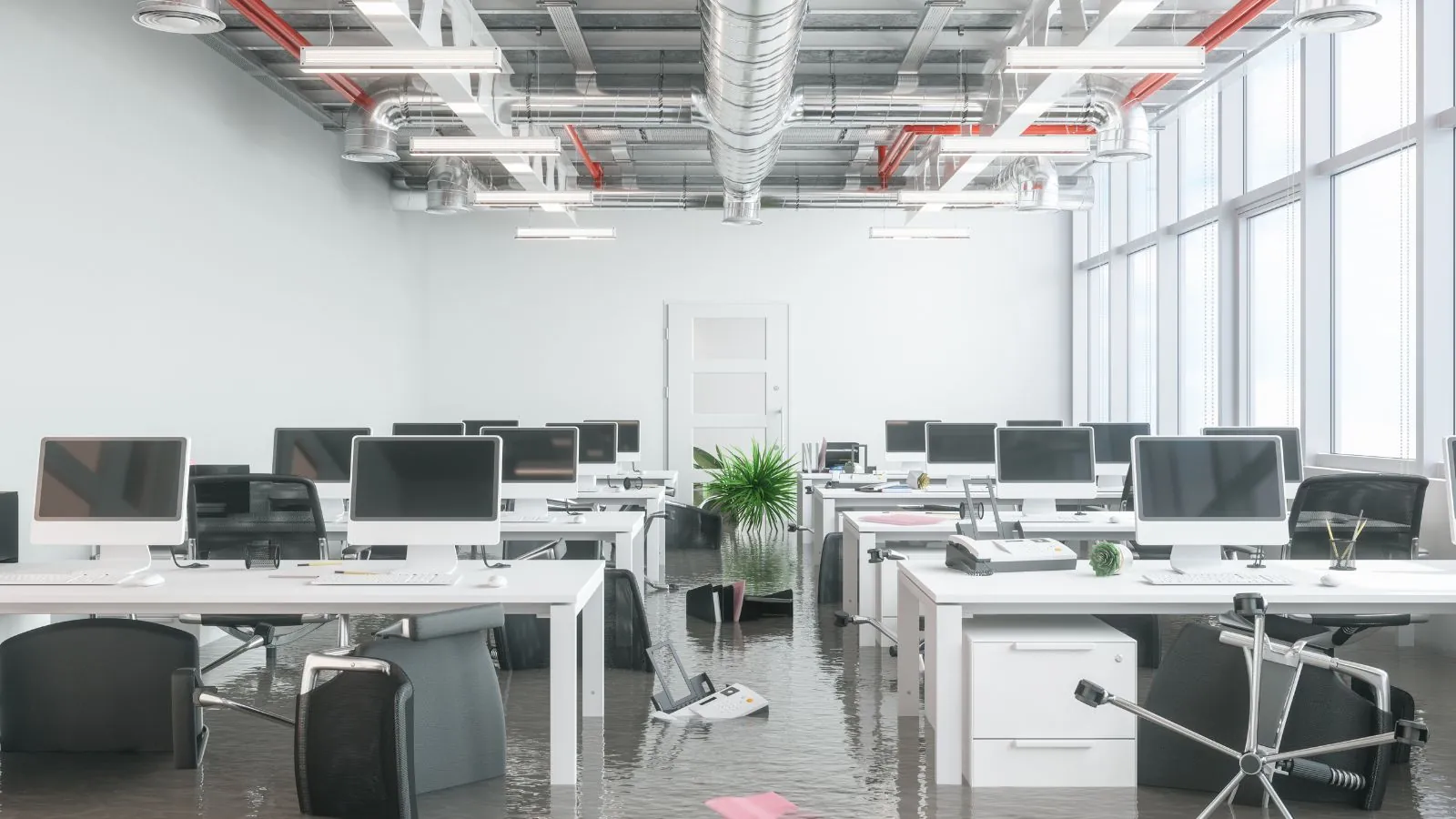
Size changes the problem. Water that would stay in one room of a house can run across an open floor plate, drop through ceiling tile, and reach the suite next door through a shared wall. A commercial loss is often a question of how many rooms, not how deep the water is.
We handle the water side of that loss: extraction, drying, cleanup and the interior repair scope. Plumbers, fire sprinkler contractors and roofers fix whatever caused it.
How the damage shows up across suites and floors
| What you see | What it often means | What happens next |
|---|---|---|
| Stained or sagging ceiling tile | Water above the grid or in the plenum | Wet tile comes out and the area above is checked |
| Wet carpet tile or lifting vinyl | Water reached the floor covering and adhesive | Extraction, then meter readings under the covering |
| Damp wall in the next suite | Water traveled through a shared wall | Both sides are mapped before drying |
| Odor and warm, damp air | Wet material in a closed space | Dehumidification and a closed drying zone |
Safety steps for a business building in the first hour
Find the shutoff
Close the supply valve for the suite or the building if you can reach it. Leave sprinkler system valves to the fire protection contractor or the fire department.
Treat power with care
Keep people out of rooms where water reached outlets, panels or floor boxes. Move computers and equipment up and away from wet floors.
Call the people who decide
Notify the property manager or owner, your insurer, and (385) 988-9410 for extraction and drying. A plumber or contractor handles the source.
Document before moving
Photograph the source, the ceiling and the floor, then list damaged inventory. Move stock and files to dry areas.
After-hours calls are normal for this work, and dispatch runs 24/7. For standing water, see our page on emergency water removal.
How we dry and clean a larger floor plan
Scope the loss
A technician walks every affected room, using moisture meters and a thermal imaging camera to find wet areas behind finishes.
Extract standing water
Submersible pumps, portable extractors and truck-mounted units remove water from floors and low spots.
Remove what cannot dry
Wet ceiling tile, insulation, carpet pad and saturated drywall come out so cavities can dry.
Dry in zones
Air movers and LGR dehumidifiers are set up room by room, and the zones are closed so readings can be tracked.
Clean and prepare for repairs
Surfaces get antimicrobial treatment and the interior repair scope is prepared, as described under water mitigation.
ANSI/IICRC S500 is a reference many professionals work from when planning drying. Daily readings go in a log that the building owner can share with an adjuster.
What changes the price of a business water job
Floor area
A larger affected area needs more extraction time and more equipment.
Number of rooms and suites
Each separate space needs its own readings and drying zone.
Finish materials
Ceiling tile, carpet tile, drywall and cabinetry each have a different removal and drying scope.
Water category
Clean supply water is simpler than a drain backup or a contaminated release.
Access and timing
Locked suites, shared access and after-hours work affect scheduling and labor.
Drying length
Concrete floors and dense materials extend the number of equipment days.
Scope and pricing are explained before work begins, and we do not quote a figure before we have seen the building.
Water in your building right now?
Call (385) 988-9410 and tell dispatch what happened and which rooms are affected.
Owner, tenant and insurer: who handles what
In a leased space, the lease and the policy decide who is responsible for the structure, the improvements and the contents. Ask your property manager and your insurer which policy responds, and whether it wants a particular contractor or documentation. Sudden discharge and gradual leaks are treated differently by most carriers. We cannot promise any outcome, but photos, moisture logs and an itemized scope make the conversation easier.
Draper City licensing and permits for the repair stage
Draper City's online portal takes applications for Commercial business licenses, along with Plumbing, Mechanical and Remodel/Alteration permits. If rebuilding after a loss changes piping, ductwork or the layout, ask the building owner or contractor whether a permit applies. We handle the drying and cleanup, and the licensed trades handle their own permitted work.
Ways to schedule work around business hours
| Approach | How it works | Trade-off |
|---|---|---|
| Work after hours | Crews arrive when the suite is closed | Less disruption, less visibility for staff |
| Phase by area | Wet rooms are dried first, others stay open | Business continues, but containment is needed |
| Close the suite | The whole space is worked at once | Fastest scope, but a full closure |
The right choice depends on the layout. We also work with buildings near Sandy and South Jordan on the same basis.
Common questions
Is commercial water damage restoration available in Draper at night or on weekends?
Yes, dispatch is 24/7. Same-day response is available when a crew is available, and arrival times are not promised.
Can you work around our business hours?
Often yes, by working after hours or in phases. The layout and the extent of the water decide what is practical.
Do you repair the pipe or sprinkler head that failed?
No. A plumber or fire protection contractor fixes the source, and we handle the extraction, drying and cleanup.
Do you work with property managers and adjusters?
Yes. We provide photos, readings and a written scope that the manager and the insurer can review.