
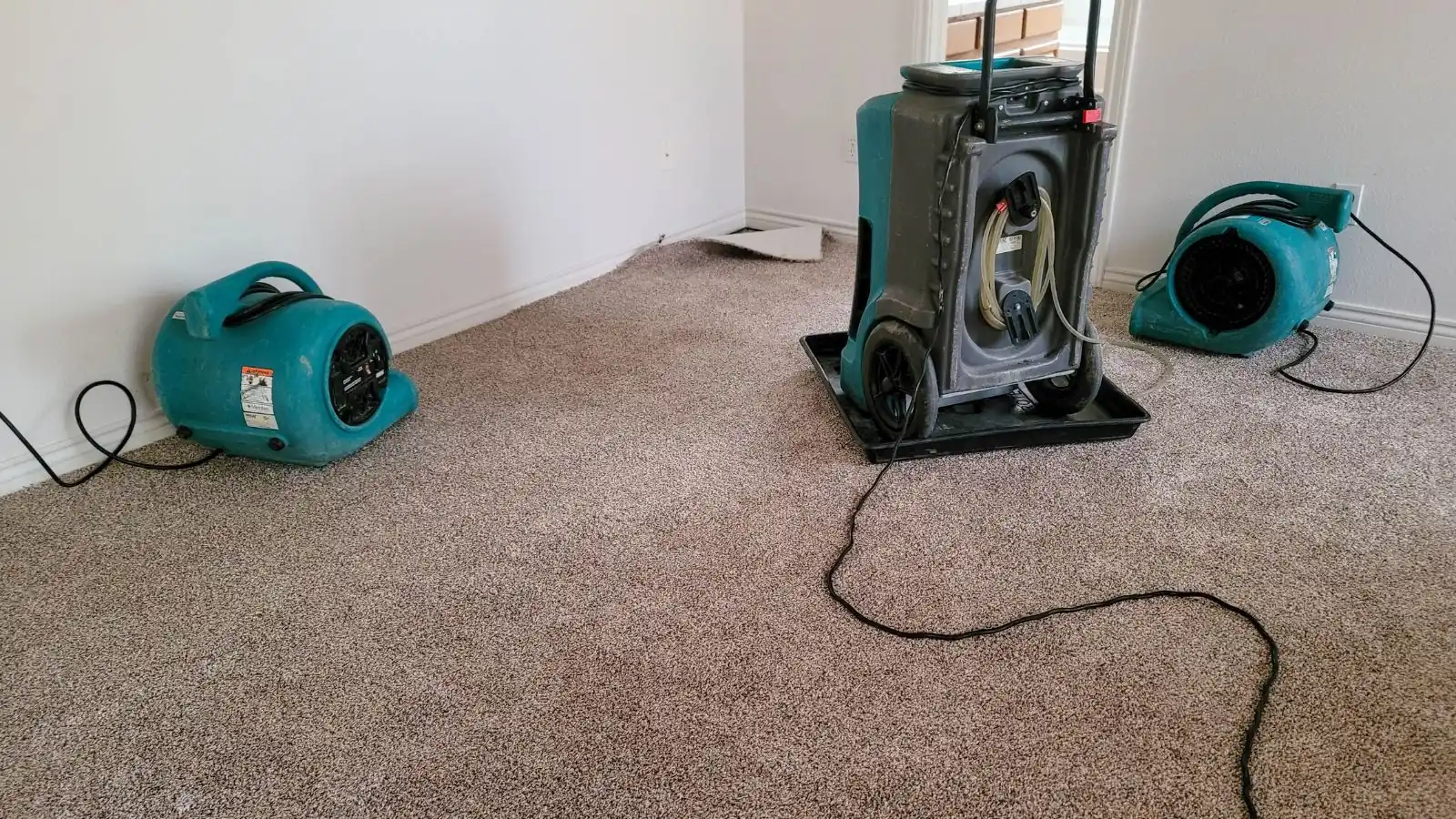
How structural drying works inside a wet Draper house
Water does not stay where it spills. It soaks into drywall, baseboards, framing, subfloor and insulation, and it keeps working its way into materials after the puddle is gone. Structural drying is the process of pulling that stored water back out until the building matches a dry reference.
The method has two halves. Air movers push air across wet surfaces so the water evaporates, and LGR dehumidifiers pull the vapor out of the air so it cannot settle somewhere else. If either half is missing, the moisture just moves around.
Climate matters less than people expect. The National Weather Service lists a normal January average high of 38.6 degrees F in Salt Lake City, so winter jobs often involve a closed, heated house. Even in dry weather, a sealed room with wet walls will not dry by itself, and propped-open windows do not move air through a wall cavity.
Signs that water is still inside after the surface looks dry
| What you notice | What it can mean | What a crew checks |
|---|---|---|
| Floor feels cool or slightly tacky | Moisture in the subfloor or pad | Meter readings across the floor |
| Paint bubbles above the baseboard | Water wicked up the wall | Height of the wet line inside the cavity |
| Musty smell in a closed room | Damp material with little airflow | Thermal imaging for hidden wet spots |
| Hardwood edges lift or cup | Wood is absorbing moisture from below | Readings from several boards |
| Windows fog in a closed room | Humid air from wet materials | Air readings next to surface readings |
Safety steps before drying equipment goes in
Stop the source
Shut off the water at the main, or have the leak repaired, before any drying starts. Equipment cannot keep up with a running leak.
Keep power away from water
Do not run cords through wet areas or plug equipment into a wet outlet. If water reached a panel or outlets, call an electrician first.
Call before you wait
Dispatch at (385) 988-9410 is open around the clock. The sooner moisture mapping starts, the less material has to be removed.
Record the damage
Photograph the source, the wet line and damaged items. Daily meter logs from the drying crew add to that record.
EPA guidance advises drying water-damaged areas and items within 24 to 48 hours to prevent mold growth. That window is why a drying plan should begin the day water is found, not after you have waited to see what happens.
How moisture mapping and daily readings run the job
Map the wet area
A technician scans with a thermal imaging camera, then confirms with moisture meters at each suspect surface.
Set the dry standard
Readings from an unaffected room of the same materials become the target the wet areas must reach.
Place equipment and close the space
Air movers go on wet surfaces, LGR dehumidifiers go in the room, and the area is closed so the drying stays in one system.
Read and adjust daily
Meters are checked every day. Air movers are repositioned and equipment is added or removed based on what the numbers show.
Remove equipment at the standard
Equipment comes off only when readings in the wet areas match the dry standard.
Some materials do not dry well enough to keep. Soaked insulation and saturated drywall are removed so the cavity can dry, as covered under water mitigation. Concrete and framing hold water longer than carpet, and we do not predict a number of days, because the readings decide.
What stretches or shortens a drying job
Material type
Concrete, thick framing and dense hardwood release water slowly compared with carpet and drywall.
How long it sat
Water that soaked in for days is deeper than water caught the same day.
Area and ceiling height
Larger rooms and tall ceilings need more air movement and more dehumidifier capacity.
Water category
Contaminated water means removing more material before drying starts.
Airflow and layout
Closed closets, built-in cabinets and finished ceilings slow evaporation.
Equipment days
Every extra day of readings and running equipment adds to the total.
Daily readings also show whether the scope is shrinking, and the price is explained before work begins.
Not sure how wet the structure really is?
Call (385) 988-9410 and we can arrange moisture mapping to find out.
Insurance and drying logs
Insurers generally separate sudden, accidental water from slow or ongoing leaks, so the cause affects the claim. Daily moisture logs, photos and dry standard readings help show what was wet and when it dried. Ask your insurer whether it needs drying records. We cannot promise coverage.
Mistakes that leave water in the structure
- Turning off equipment overnight because it is loud, then restarting it later.
- Judging dryness by touch instead of with a meter.
- Opening windows in winter or while dehumidifiers run, which defeats a closed drying space.
- Re-covering floors or painting walls before readings reach the standard.
- Waiting past the first day to call, then relying on mold remediation later.
What each piece of drying equipment does
| Equipment | Job | Where it works |
|---|---|---|
| Moisture meter | Reads moisture inside materials | Walls, floors, framing |
| Thermal imaging camera | Shows temperature patterns that point to wet areas | Ceilings and walls before opening them |
| Air mover | Moves air across wet surfaces to speed evaporation | Floors and lower walls |
| LGR dehumidifier | Takes vapor out of the air | Inside the closed drying space |
Once equipment is gone, the EPA recommends keeping indoor humidity under 60 percent, ideally between 30 and 50 percent. We handle drying for homes in Riverton and Alpine the same way. ANSI/IICRC S500 is a reference many professionals work from.
Common questions
Is structural drying available in Draper at night or on weekends?
Dispatch is 24/7 and same-day response is available when a crew is available. We do not promise a set arrival time.
How do you know when the house is dry?
Readings in the wet areas are compared with readings from an unaffected area of the same material. Equipment comes off when they match.
Can I just open windows and use fans?
Fans and open windows will not pull water out of wall cavities or subfloors. A closed system with dehumidifiers handles it.
Why do you check on the equipment every day?
Moisture readings change daily, and the equipment layout changes with them. Skipping checks can leave a wet pocket behind.