
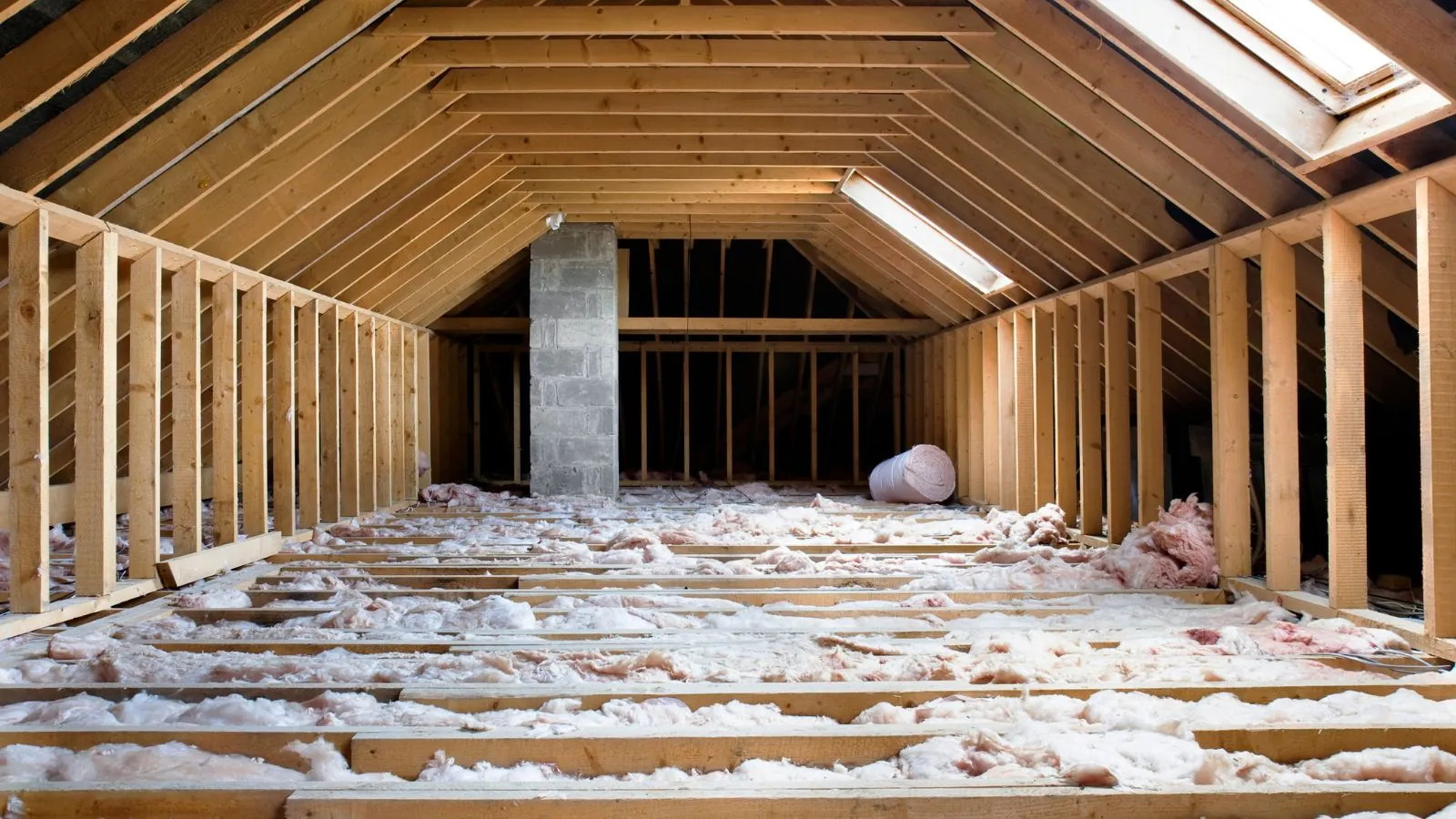
How roof water reaches a Draper ceiling
Water takes the easiest path down. It gets in at a failed flashing seam, a cracked vent boot, a valley or a patch where wind lifted shingles. Then it runs along the sheathing, drips onto insulation and spreads sideways before it reaches drywall.
Winter adds ice dams. Heat escaping from the living space melts snow on the upper roof, and the meltwater turns back to ice at the cold eave. Water backs up under the shingles and finds nail holes. The National Weather Service's Salt Lake City records list normal seasonal snowfall at 51.9 inches, so valley roofs carry plenty of snow each winter.
Spring is the second wave. Salt Lake County's 2024 runoff update put snowpack around the valley at 130 percent of normal, which is a lot of stored water to melt in a few warm weeks. The same National Weather Service data shows the swing, from 14.3 inches in the 1933 to 1934 season to 117.3 inches in 1951 to 1952.
Stains, sags and drips: what the ceiling is telling you
| What you see | What it usually means | What to do next |
|---|---|---|
| A brown ring that grows after rain or melt | Water is pooling in insulation above and soaking the drywall | Circle the edge in pencil, write the time and call for moisture mapping |
| A bulging or sagging ceiling | Water is trapped above the board and its weight is pulling it down | Stay out from under it and keep people and pets out of the room |
| Drips from a light fixture or fan | Water has reached a wiring box | Switch off that circuit at a dry panel and keep clear of the fixture |
| Peeling paint near the top of an exterior wall | Water is running down inside the wall cavity from the eave | Treat the whole wall as wet until readings say otherwise |
Roof leak safety steps for the first hour
Keep off the roof
Wet shingles and snow are slick. Move belongings, set out buckets and lay plastic sheeting, and leave the roof itself to a roofer.
Watch the wiring
If water drips near a light, fan or outlet, turn that circuit off at a dry panel. If the panel is wet or you cannot reach it safely, stay away and call the utility.
Call both trades
Ring a roofer to tarp or repair the opening and (385) 988-9410 for extraction and drying. The two jobs can run side by side.
Document first
Take dated photos of every stain and any visible roof damage. Pull valuables out of the room before anything is moved.
Drying the attic floor and the ceiling below
Map the wet area
Moisture meters and a thermal imaging camera show how far water traveled through insulation, ceiling board and wall tops.
Pull what cannot dry
Saturated insulation and soft ceiling drywall come out first because they hold water against the framing.
Contain and extract
Poly containment keeps dust out of the living space while portable extraction units lift standing water from floors below.
Dry the cavity
Air movers push air over framing and LGR dehumidifiers pull moisture out of the air.
Check and treat
Readings continue until framing matches an unaffected area. Surfaces get antimicrobial treatment and HEPA air scrubbers run if material was removed.
Attics are awkward to dry because they are vented by design, so equipment placement matters. We follow readings against dry standards, using ANSI/IICRC S500 as a reference many professionals work from.
Interior repair follows drying: insulation, drywall, texture and paint. We do not repair roofs. Your roofer closes the opening and we handle the damage inside. Our water mitigation page explains the drying stage.
What changes the price of a roof leak cleanup
Wet area size
One stained ceiling is a small job. A leak that spread across several rooms is a larger one.
Insulation type
Blown-in cellulose holds more water and is harder to remove than batts.
Time since the leak
A leak caught the same night is mostly surface wetness. One left for weeks reaches framing.
Attic access
A tight hatch slows removal and equipment setup.
Ceiling finish
Textured or vaulted ceilings take more repair work than flat ones.
Mold present
Visible growth adds containment and a separate scope, covered on our mold remediation page.
The scope is explained before work starts so you can see what drives the number. Call (385) 988-9410 and the dispatcher will tell you what to photograph.
Ceiling stain spreading right now?
Call (385) 988-9410 any hour and a crew can be sent the same day when one is available.
Roof leak claims: storm opening versus slow seep
Insurers tend to separate sudden damage from long-term wear. A storm that tears off shingles is often handled differently from flashing that has seeped for a year. Ask how your insurer classifies each, and whether roof repair and interior damage are separate items. We cannot promise coverage.
Mistakes that make a wet attic worse
- Leaving wet insulation in place because the ceiling looks fine. It keeps soaking the framing.
- Painting over a stain before the cavity is dry. The stain comes back and mold can grow behind the paint.
- Waiting for a dry week. Meltwater and rain return, and the attic stays damp.
Roofer, permit office and drying crew: who does which job
Replacing a roof is regulated work. Draper City lists a Re-Roof permit among the building permits it takes through its online portal, so ask your roofer who is pulling it. The roofer stops water entering. We dry and rebuild the interior.
We also work in Herriman and Alpine, where the same melt puts water through roofs.
Common questions
Is emergency roof leak water damage cleanup available in Draper?
Yes. Dispatch runs 24/7, including storm nights and holidays. Same-day response is available when a crew is available, and we do not promise a set arrival time.
Can you tarp or repair my roof?
No. We do not do roofing. A roofer closes the opening, and we dry and repair the interior.
Does wet attic insulation always need replacing?
Often it does, especially cellulose that stayed wet for days. Meter readings decide, and some dry batts can stay.
How soon can mold start after a roof leak?
The EPA advises drying water-damaged areas and items within 24 to 48 hours to prevent mold growth. Insulation that stays wet longer is a common starting point.