
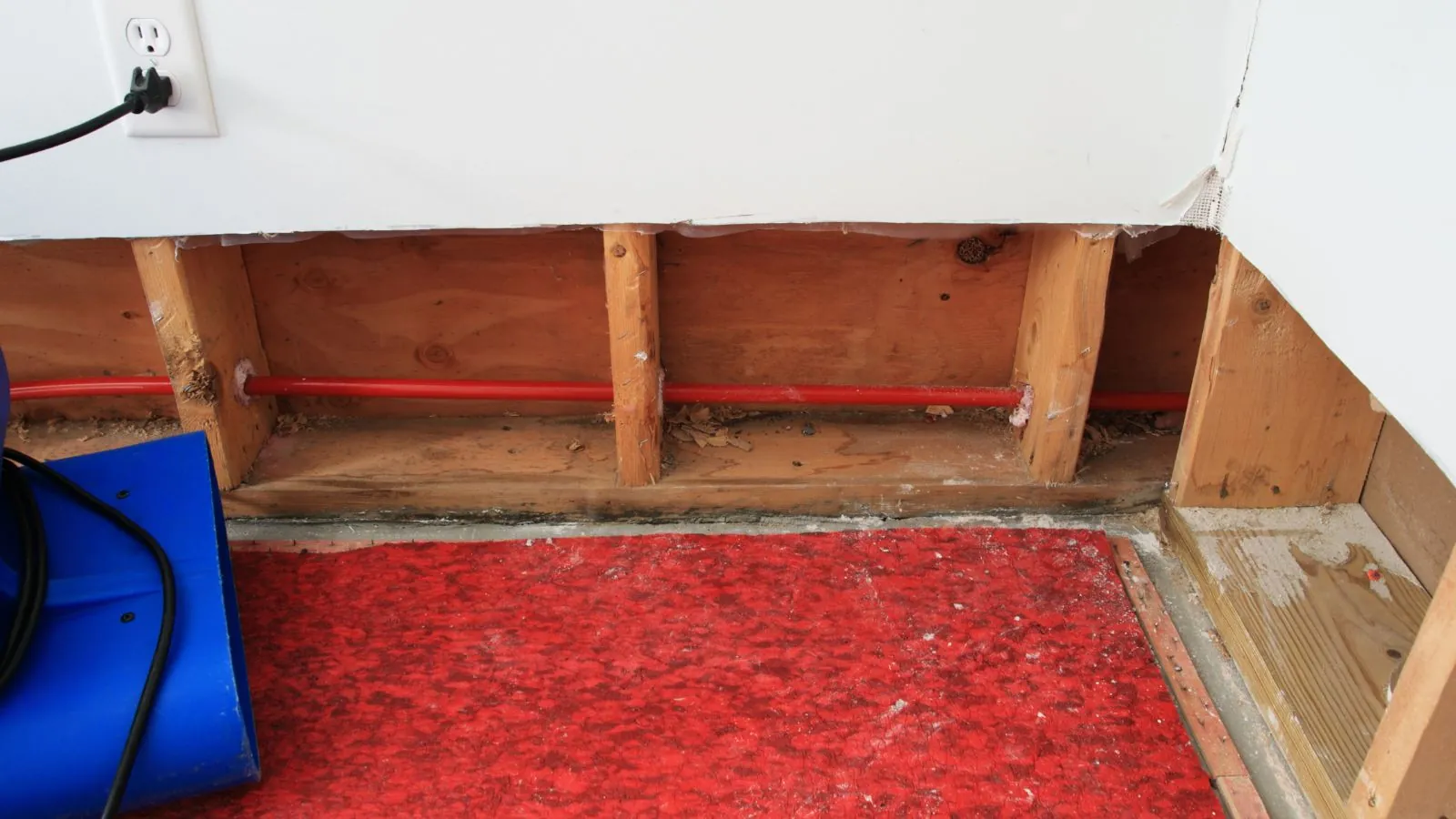
What water does inside a wall cavity
Drywall is gypsum between paper faces, and paper pulls water upward like a wick. A puddle at the baseboard can show up as a stain a foot or more up the wall. Behind the surface sit insulation, wires, framing and a bottom plate, and those hold moisture long after the wall looks normal.
Wet drywall also loses strength. It softens, sags at seams and crumbles at screws. Painting over a wet wall hides the problem for a while, and then the paint bubbles again. The only reliable fix is to open the wall, dry what is behind it, and close it with new material.
This page is about walls. Ceiling repairs after a roof or upstairs leak have a different structure, and structural drying covers the drying science in more detail.
Wall symptoms and what they usually mean
| What you see | What it often means | What happens |
|---|---|---|
| Paint blisters near the floor | Water has wicked up from below | Readings above and below the blister |
| Drywall feels soft or crumbles | Gypsum is saturated | The section is cut out |
| Baseboard swells or separates | Water reached the base of the wall | Baseboard is removed and the plate is checked |
| Stain with a dark ring | Repeated wetting at one spot | Source is found, then the cavity is opened |
| Musty odor from a wall | Damp insulation or paper | Thermal imaging and a meter before cutting |
Safety steps before anyone cuts or removes a wall
Shut off the water
Close the valve that feeds the leak so the cavity stops filling. Our crews work on what the water damaged, not on the pipe itself.
Leave outlets and wiring alone
Wet walls can hold live wires. Switch off the breaker if you can reach it safely, and have a licensed electrician check outlets in the wet wall.
Check the age of the home
In a house built before 1978, paint may contain lead. Do not sand, scrape or tear into old walls on your own.
Photograph first
Take photos of the wet line, the stained area and the source before anything is removed.
Call (385) 988-9410 and describe the walls. We will tell you what to leave alone until a crew has measured the moisture.
How a wall is opened, dried and rebuilt
Find the wet line
Moisture meters and a thermal imaging camera show how high the water went and which walls are involved.
Cut above the wet line
A flood cut removes drywall and baseboard to a clean edge above the highest reading.
Remove wet insulation
Saturated insulation is pulled out, and the stud cavity is opened to air.
Dry the framing
Air movers and LGR dehumidifiers dry studs and plates until readings match an unaffected wall.
Close, finish and paint
New drywall is hung, taped and finished, texture is matched to the room, and primer and paint go on.
We handle the drying and the interior repair scope. A plumber repairs the pipe, and a licensed electrician handles any wiring. ANSI/IICRC S500 is a reference many professionals work from for drying goals. Wider repair planning is covered under water damage repair.
What decides the price of a wall repair
Height of the wet line
A higher cut means more drywall to remove and replace.
Linear feet of wall
Long runs cost more than a single patch.
Insulation type
Batt insulation and spray foam are removed and replaced differently.
Texture and finish
Matching a skip trowel or orange peel takes more time than a smooth wall.
Trim and cabinets
Baseboard, casing and built-ins must be detached and reset.
Paint scope
Painting only the repair or the whole wall for a clean match changes the total.
Price and scope are laid out before work begins, and you review the final texture and paint choices.
Are your walls soaked or stained?
Call (385) 988-9410 and we will tell you what to look at before anyone starts cutting.
Insurance and wall repair scope
Sudden leaks are often treated differently from slow ones, and a long-term stain may be judged as maintenance. Ask your insurer how it handles drywall, paint matching and trim, and whether it wants an itemized scope. Photos of the wall before removal and meter readings help. We cannot promise coverage.
Mistakes that bring the stain back
- Painting over a wall that still reads wet.
- Closing a cavity with new drywall before the studs are dry.
- Cutting through painted walls in an older home without checking for lead.
- Leaving wet insulation in the cavity because the drywall was replaced.
- Skipping primer on a repair, which lets the patch show through.
Older walls, lead paint, asbestos and Draper permits
The EPA Renovation, Repair and Painting rule covers anyone paid to disturb painted surfaces in homes built before 1978, including small firms. Ask any contractor, including us, how they handle it before work starts.
The Utah Division of Air Quality says residential buildings of four or fewer units built on or after January 1, 1992 no longer need an asbestos inspection before renovation or demolition. For older buildings, the state requires an inspector holding a Utah asbestos credential before demolition, with a waiting period of at least ten working days after the notice. That rule is aimed at demolition, not small patches, so ask what applies to your job.
Draper City takes Remodel/Alteration, Plumbing and Mechanical permit applications through its online portal. Ask the contractor handling the rebuild whether your scope needs one. Homes in Herriman and Sandy may have different local rules.
Common questions
Is wall and drywall water damage repair available in Draper at night or on weekends?
Dispatch is open 24/7 for the water. Same-day response is available when a crew is available, and the rebuild is scheduled once the framing is dry.
Can wet drywall be dried instead of replaced?
Sometimes, if the water was clean and caught early. Saturated or contaminated drywall is cut out.
Do you repair the plumbing behind the wall?
No. A plumber repairs the pipe, and we handle the drying and the wall rebuild.
Will the new paint match?
Primer and paint are matched to the room, but older paint and sheen can vary, so painting the full wall is the safest choice.