
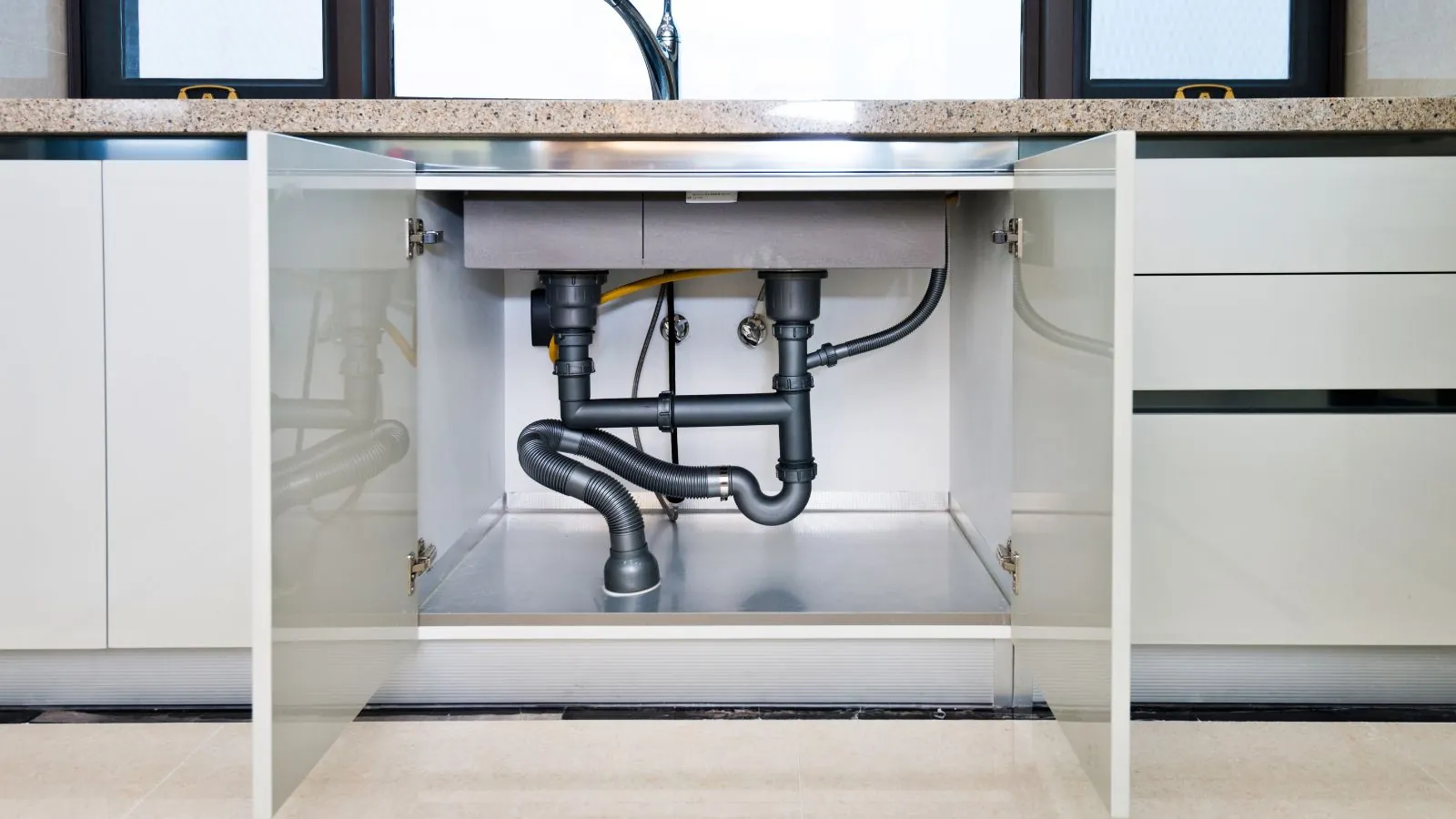
Where kitchen water comes from and where it goes
Most kitchen leaks start under the sink. A supply stop can weep, a disposal flange can loosen, or a drain connection can slip, and the water lands on the cabinet floor. From there it spreads sideways into the toe-kick cavity, down through the pipe cutouts and into the subfloor. In a house with a basement or crawl space below, it may drip into the ceiling underneath without a trace upstairs.
The U.S. Census Bureau counts 16,981 households in Draper, averaging 2.87 people, which means most kitchens work hard every day. It also lists the median owner-occupied home value at about $785,000, so cabinets and flooring are often a large share of the loss. Leaks tied to the dishwasher, fridge or washer are covered on the appliance leak page.
Cabinet and floor clues after a kitchen leak
| Clue | What it means | Why it matters |
|---|---|---|
| Swollen cabinet base or peeling edges | Particleboard has absorbed water | Swollen boxes rarely return to shape |
| Musty smell with the doors closed | Moisture inside the cabinet or toe kick | Hidden damp invites growth |
| Lifting laminate or cupped planks | Water under the flooring | Subfloor may be wet too |
| Cracked grout or loose tile | Movement from a wet subfloor | Tile can trap moisture beneath it |
| Stain on the basement ceiling below | Water has passed through the floor | Both levels need drying |
Kitchen leak safety steps for the first hour
Close the sink stop
Turn the small valves under the sink clockwise. If they will not seal, close the main water valve.
Keep electricity away
Do not use outlets near the water or run the disposal. If water reached an outlet or the panel, call an electrician.
Empty the cabinet
Remove cleaners, pots and stored items so the base can be inspected and dried.
Call and photograph
Call (385) 988-9410 for water removal. Photograph the leak, the cabinet and the floor before anything is changed.
A wet floor around the stove or fridge can be slippery, so wear shoes. Keep children out of the room.
Detach, dry and reset the cabinet run
Extract and map
Portable extraction units remove standing water. Moisture meters and a thermal imaging camera find wet cabinets, walls and subfloor.
Open the cavities
Toe-kick boards come off and small holes may be made in cabinet backs so air can reach the wet areas.
Detach if needed
When the countertop or a cabinet blocks drying, the run may be detached and set aside, then reset after drying.
Dry the structure
Air movers and LGR dehumidifiers dry cabinets, walls and the floor, with readings logged at each visit.
Clean and treat
Surfaces get antimicrobial treatment where needed, and we list the interior repair scope.
Solid wood cabinets often dry and stay. Particleboard boxes that swelled usually do not, so they are replaced. Tile and laminate over a wet subfloor may need to come up. ANSI/IICRC S500 is a reference many professionals work from, and EPA guidance says to dry wet areas within 24 to 48 hours.
Pricing factors for a kitchen water job
Cabinet material
Solid wood and particleboard behave very differently when wet.
Countertop type
Stone and laminate tops affect whether a detach is needed.
Flooring
Tile, laminate and hardwood each dry on different terms.
Water reach
Water reaching the floor below doubles the drying area.
Leak duration
A day of dripping is not the same as weeks.
Kitchen layout
Island bases and tight corners limit access.
We inspect first, then explain scope and price before work starts. Kitchens vary too much for an accurate number sight unseen.
Leak under the sink?
Close the stops, then call (385) 988-9410 and we will plan the drying.
Insurance after a sink or supply leak
Insurers distinguish sudden damage from long-term seepage, and a drip that ran for weeks can be treated differently from a burst fitting. Ask what your policy says about cabinets, flooring and countertops, and whether the failed part is included. We cannot promise coverage. Keep the replaced part and photographs, since adjusters like to see them.
Permits, plumbers and replacing cabinets
Replacing a leaking fitting is plumbing work and belongs to a plumber. Draper City says its online portal takes plumbing and remodel or alteration permit applications, so ask the city or your contractor what a cabinet or floor rebuild needs before you start. We dry and clean, and then you can bring in whoever repairs the kitchen.
Kitchens in nearby towns such as South Jordan and Riverton leak in the same ways. The water damage repair page describes the rebuild.
Habits that cut down on sink base surprises
- Look under the sink monthly for stains, drips and a musty smell.
- Replace brittle supply lines before they fail.
- Keep a shallow tray or liner in the cabinet to catch drips.
- Do not store cleaners where they can hide a slow leak.
A quick monthly look catches the small leaks that cause the biggest cabinet losses.
Common questions
Are you available for kitchen water damage in Draper at night or on weekends?
Yes, you can reach dispatch at (385) 988-9410 at any hour. Same-day response is available when a crew is available, though we never promise a clock time.
Can wet cabinets be saved?
Solid wood often can. Swollen particleboard usually cannot, and moisture readings help decide.
Do you remove the countertop?
Only when it blocks drying. The run may be detached, dried and reset afterward.
What about water that went through to the basement?
We check the level below too, because water that passes through a floor leaves both areas wet.
Do you fix the leaking pipe?
No. A plumber repairs the source. We remove the water, dry the kitchen and handle the interior repair scope.