
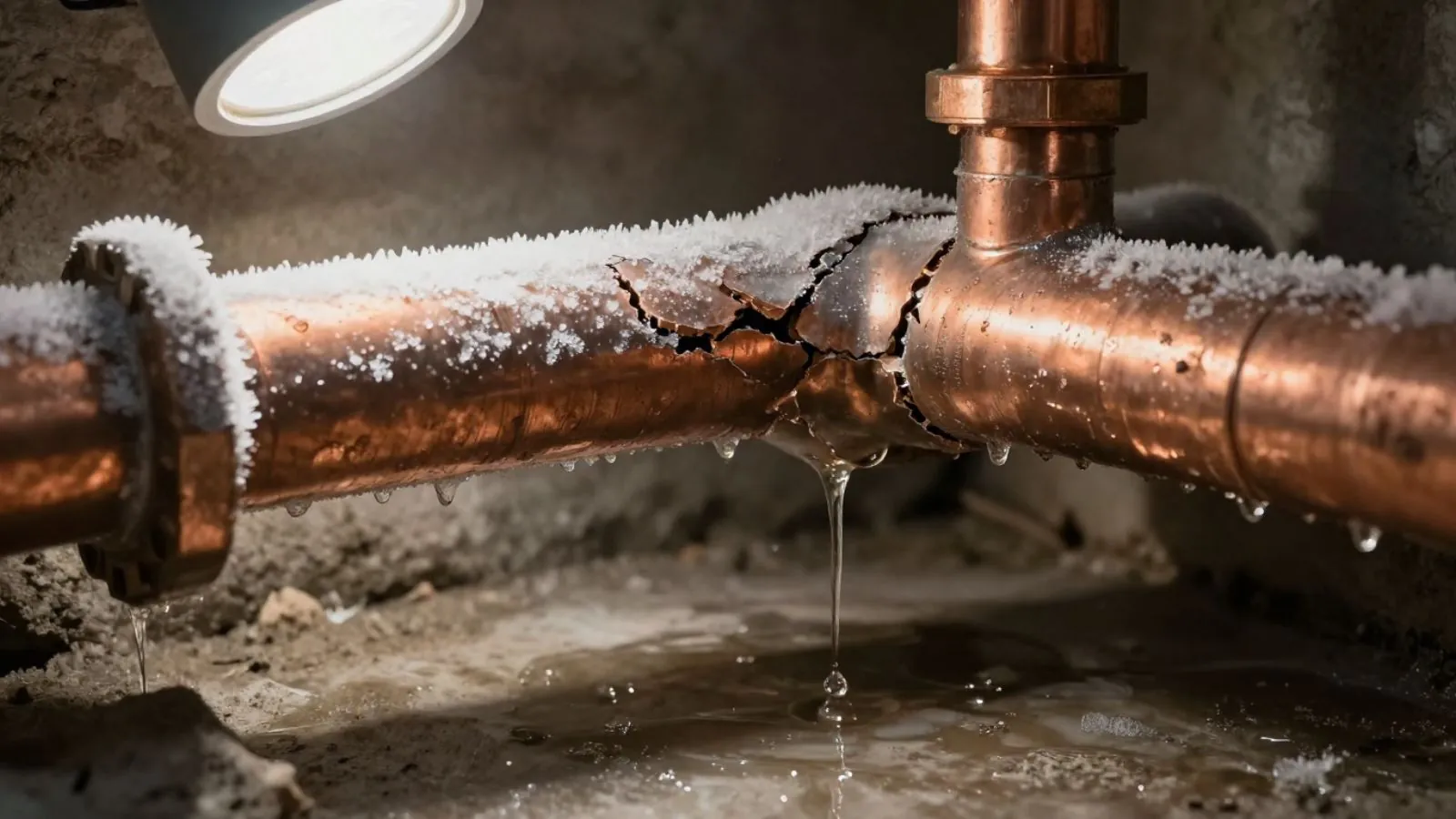
Why Draper pipes freeze and split at the thaw
Water expands as it turns to ice. A frozen pipe often splits along its length, but the ice plug holds the water back, so nothing leaks while it stays frozen. The flood begins when the plug melts and pressure pushes water through the crack. People often find the damage on a warm afternoon, long after the cold night that caused it.
Salt Lake Valley winters give pipes plenty of chances. The National Weather Service's Salt Lake City normals list January as the coldest month, with an average low near 24 degrees. The same normals show about 21 days a year when the high never climbs above 32, so pipes in a poorly heated space can stay frozen all day. If the pipe has already failed under pressure, the burst pipe page covers that side.
Where frozen lines hide in Draper houses
| Location | Why it freezes | What the thaw looks like |
|---|---|---|
| Exterior wall behind a sink | Insulation is thin and the cabinet blocks room heat | Wet cabinet base and a damp wall |
| Unheated garage | Supply lines run along cold walls and the door | Water across the slab and into the house wall |
| Hose bib line | Water stays in the pipe inside the wall after the hose is off | A wet cavity behind the siding, often unseen |
| Attic or ceiling space | Lines sit above insulation, away from house heat | Stained ceiling and soaked insulation |
| Crawl space or bump-out | Cold air moves under the floor | Wet floor framing and sagging flooring |
Frozen pipe safety steps before and after the thaw
Shut off the water
If a pipe is frozen but not yet leaking, close the main valve and open the faucet on that line. If it is already leaking, close the main first.
Thaw with gentle heat
Use a hair dryer or warm towels. Never use an open flame, torch or propane heater.
Watch the electricity
Keep clear of outlets and the panel if water is running nearby.
Call and document
Call (385) 988-9410 for water removal and a plumber for the pipe. Photograph frost, splits and wet surfaces before anything gets moved.
If you cannot find the frozen section, do not keep heating random walls. Leave the water off and let a plumber locate it.
How we dry a house after a freeze-related flood
Find the wet areas
Moisture meters and a thermal imaging camera trace water through exterior walls, ceilings and floors.
Remove standing water
Submersible pumps and extraction units clear floors, carpet and pad.
Open cold cavities
Wet insulation in an exterior wall often has to come out, and a flood cut gives airflow into the cavity.
Dry in a controlled space
Air movers and LGR dehumidifiers run with poly containment so the drying stays in the wet rooms.
Clean and treat
Antimicrobial treatment goes on surfaces that stayed wet, and we list the interior repairs.
Cold slows drying, so house heat matters. ANSI/IICRC S500 is a reference many professionals work from, EPA guidance says to dry wet areas within 24 to 48 hours, and our water mitigation page explains the daily check.
What affects the cost of a freeze loss
How long it ran
A split noticed during the thaw floods less than one that ran while you were away.
Where the pipe sits
Exterior walls and ceilings take more opening than an exposed garage line.
Number of splits
One cold night can crack several lines at once.
Insulation
Soaked insulation has to be removed and replaced.
Flooring
Carpet, hardwood and laminate over a wet subfloor dry differently.
Home size
More rooms mean more equipment and more days of readings.
We look at the damage in person, then explain scope and price before work begins. Freezes rarely crack just one line, so we check beyond the first wet spot.
Pipe thawed and leaking?
Close the main valve and call (385) 988-9410, and a crew can start planning your cleanup.
Insurance and a vacant house in winter
Freeze claims often hinge on whether heat was kept on. Many policies expect an empty home to stay heated, so read yours before you travel in winter. Ask your insurer what it requires for a vacant home and what proof of heating they want. We cannot promise coverage, but dated photos and drying records show the adjuster what happened.
Preparing before the next cold snap
- Disconnect hoses and drain or shut off outdoor spigots before freezing nights.
- Open cabinet doors on exterior walls so room heat reaches the pipes.
- Let a faucet drip on the coldest nights when a line has frozen before.
- Keep the thermostat set above the lowest setting when you travel.
- Know where your main shutoff is and make sure it turns.
Open garage doors and gaps where pipes enter a wall are common culprits.
Frost depth, buried lines and the local picture
NOAA's state climate summary says average winter lows are below freezing across Utah, so cold is normal here. A Salt Lake Valley city's building criteria list a 30 inch frost depth, which shows why shallow or uninsulated lines are at risk. We also work in Herriman and Riverton, where cold garages and exterior walls cause the same problems.
Common questions
Is emergency frozen pipe water damage restoration available in Draper?
Yes. Our line at (385) 988-9410 is staffed around the clock, and a crew can come the same day when one is available. We do not name an arrival time in advance.
Can I thaw a frozen pipe myself?
A hair dryer or warm towels is a safe way to try. Never use a flame or torch, and call a plumber if you cannot reach the frozen section.
Why did my pipe leak only after it warmed up?
The ice acted like a plug. Once it melted, water flowed through the crack that the freeze had already made.
Will insurance cover freeze damage?
That depends on your policy and on whether heat was maintained. Ask your insurer before you travel, and keep photos and records.
Do you fix the split pipe?
No. A plumber repairs the pipe. We remove the water, dry the structure and handle cleanup and the interior repair scope.