
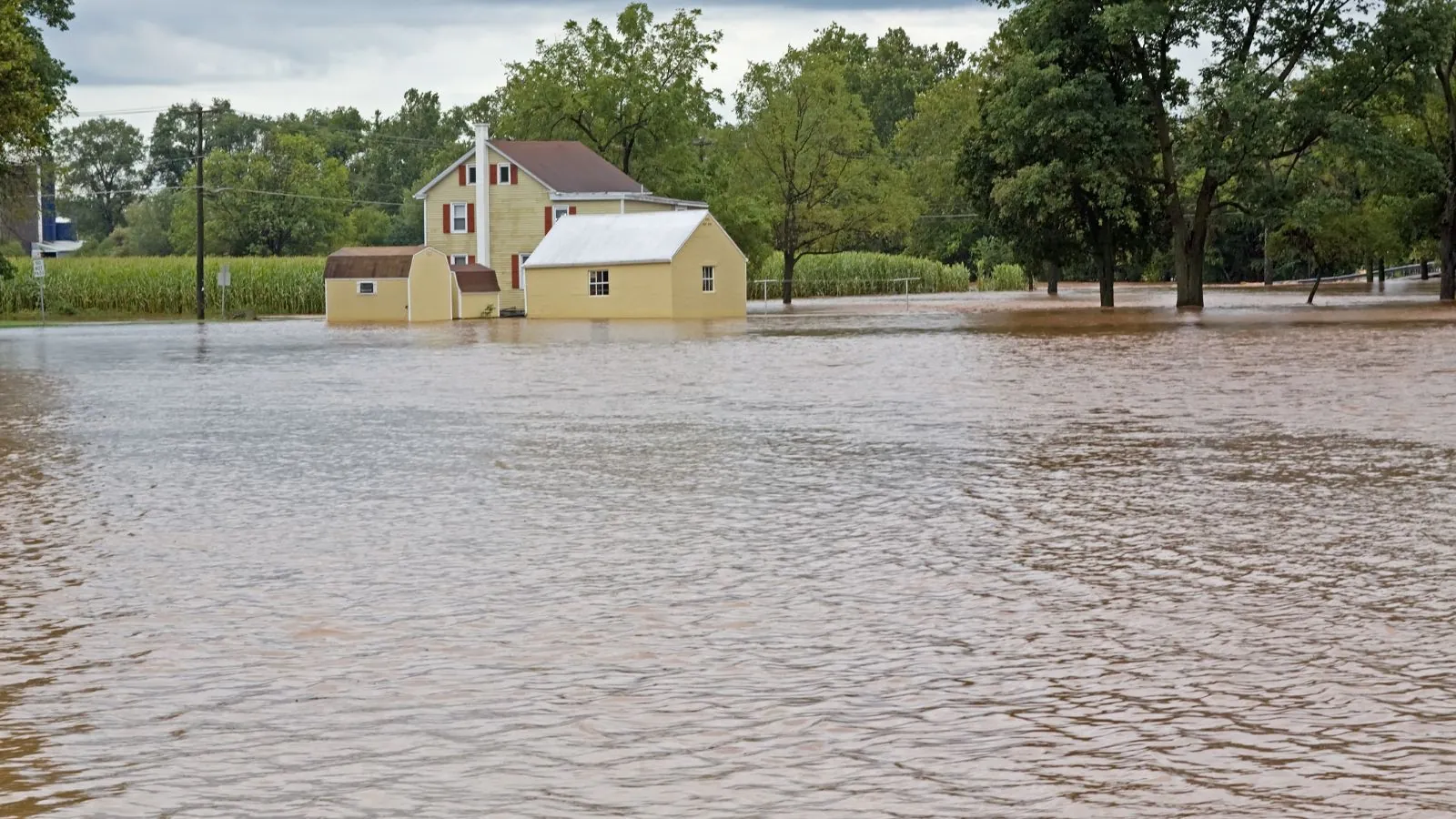
How storm water gets inside a Draper home
Most storm water never rises like a flood. It arrives through weak points at the building envelope. Gutters overflow and dump water beside the foundation. Window wells fill faster than they drain. Wind drives rain sideways under siding and around window frames, and water sheets across a driveway toward a garage door.
Draper's August 3, 2023 monsoon storm shows how fast it can happen. About 2 inches of rain fell in a little over an hour, and a state of emergency followed. Intense bursts like that overwhelm drains built for ordinary rain, so water goes looking for the lowest opening.
That is the line between this page and our flood damage restoration page. Storm water here means rain that reaches the building and the grade around it. A rising creek or canal belongs in the flood category, which insurers treat differently.
Where storm water enters and what it leaves behind
| Entry point | What you find afterward | Why it matters |
|---|---|---|
| Overfull window well | Water and silt on a basement floor under the window | Mud-laden water carries contaminants, so porous materials may not be saved |
| Garage door threshold | A wet slab and damp drywall at the bottom of the wall | Water wicks up the wall faster than it looks |
| Wind-driven rain at windows | Stained trim and wet insulation in the wall | Wall cavities stay damp long after the sky clears |
| Downspout dumping at the foundation | Damp basement wall and a musty smell | Repeated seepage invites mold |
Storm safety steps before you touch anything
Stop the inflow
Only if it is safe and the rain has eased, redirect water away from the opening with sandbags or boards. Never wade into deep water to do it.
Respect the electricity
Stay out of a basement with standing water if outlets or the panel could be wet. Call the utility or 911 if water has reached them.
Call for help
Dial (385) 988-9410 for pumping and drying. Do not drive through flooded roads to reach the house.
Photograph first
Take dated photos of the water line, the entry point and the gutters before cleanup begins.
Storm water often carries mud, fertilizer and debris. Wear boots and gloves, and keep children and pets out of it.
Cleanup order after a storm: mud out, water out, then dry
Remove debris and silt
Mud and gravel come out first so pumps and extractors do not clog and the floor can be inspected.
Pump and extract
Submersible pumps clear standing water. Portable and truck-mounted extraction units pull the rest from carpet and slab.
Map the moisture
Moisture meters and a thermal imaging camera show where water went into walls and under flooring.
Dry the structure
Air movers and LGR dehumidifiers run until readings match an unaffected area, following ANSI/IICRC S500 as a reference many professionals work from.
Clean and treat
Hard surfaces are cleaned and sanitized, antimicrobial is applied and HEPA air scrubbers run where material was removed.
Mud first is not optional. Silt left in place keeps materials wet and makes later drying harder. Our water damage cleanup page covers debris removal and sanitizing in more detail.
What changes the cost of storm water cleanup
Amount of silt
Heavy mud takes more labor to shovel and haul before extraction can start.
Water depth
Inches of water on a slab is a different job than a flooded finished basement.
Flooring type
Carpet and pad usually come out. Tile and sealed concrete often stay.
Affected levels
Water that reached an upstairs wall adds work beyond the basement.
Hours since entry
Waiting lets moisture soak into drywall and framing.
Contamination
Water that picked up sewage or heavy debris needs added containment and sanitizing.
We explain the scope before work starts. Describe the water line when you call (385) 988-9410 and the dispatcher can tell you what to photograph first.
Water coming in during the storm?
Call (385) 988-9410 any hour and we can send a crew the same day when one is available.
Storm water, flood and your policy
Coverage often turns on how the water arrived. FEMA says most homeowners insurance does not cover flood damage and that a National Flood Insurance Program policy typically takes 30 days to take effect. That means a policy bought as storm clouds gather will not help.
Ask your insurer whether wind-driven rain, a clogged gutter and a surface flood are treated as separate causes. We cannot promise coverage, but we keep moisture logs and photos that an adjuster can read.
Before monsoon season: gutters, wells and grading
- Clear gutters and extend downspouts several feet from the foundation.
- Clean window wells and check that their drains are not packed with soil.
- Walk the lot and look for low spots where the ground slopes toward the house.
- Keep the basement floor drain clear and test any sump pump.
Sandbags, basins and who handles which water
Salt Lake County supplies sandbags, 25 per vehicle per day, and says residents are responsible for protecting their own property. Draper City's storm water division runs more than 100 detention and retention basins, but those cannot stop water from reaching a window well on your lot. County Flood Control handles rivers, creeks and canals, while local roads fall to the municipality.
We also serve South Jordan and Sandy, where the same storms put water into basements.
Common questions
Is emergency storm water damage cleanup available in Draper?
Yes. Dispatch answers 24/7, including during storms. A crew can be sent the same day when one is available, though we do not promise an arrival time.
Is storm water damage the same as flood damage?
Not exactly. Storm water here means rain reaching the building and grade. A rising creek or canal is a flood, and insurers handle the two differently.
Should I save mud-soaked carpet?
Usually not. Mud-laden water counts as contaminated, and carpet and pad are porous. Hard surfaces are more often cleaned and kept.
Can you stop water from coming in again?
No. Grading, window wells and drainage are separate trades. We dry and repair what the water damaged.