
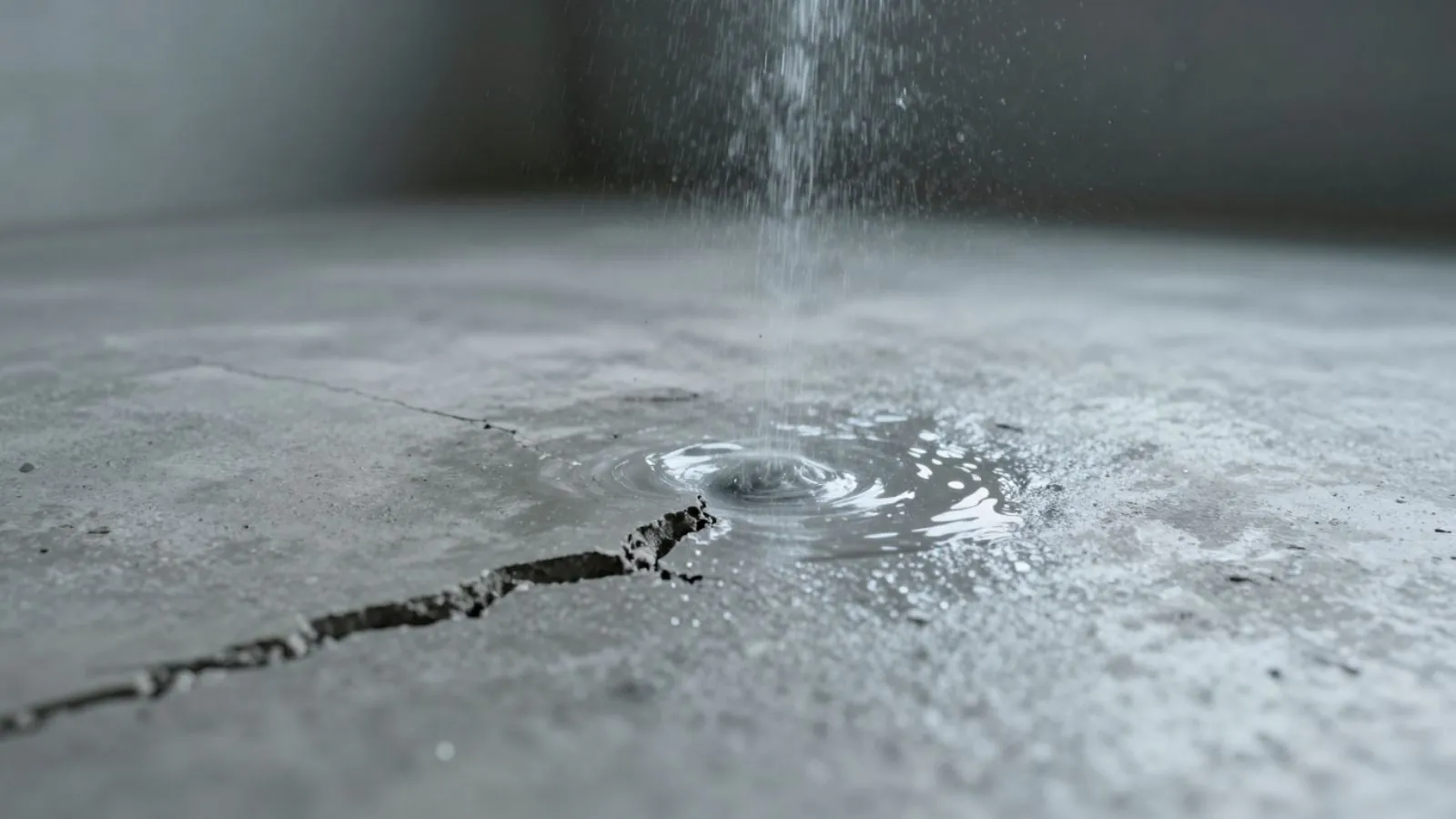
Why a true slab leak is the less common case in Draper
Slab leaks belong mostly to slab-on-grade houses, where supply lines run in or under the concrete. Draper homes are mostly built over basements and stem walls, so plumbing usually runs in joists and walls where leaks show sooner. We would rather say that plainly than sell you a diagnosis that does not fit.
Slabs still exist here. Garage floors, room additions, a basement slab with lines beneath it, and a few slab-on-grade houses can all hide pipe under concrete. A pinhole in a copper line or a failed joint leaks into the gravel bed, then the water finds a crack, a wall base or an expansion joint and comes up.
If the water is in a finished basement from a more ordinary cause, start with our flood damage restoration page or our water mitigation page. They cover the common cases.
Signs of a leak under a concrete floor
| Sign | What it may mean | What to check |
|---|---|---|
| A warm spot on the floor | A hot water line is leaking beneath | Note the spot and tell the plumber |
| Running water sound with every fixture off | A pressurized line is open somewhere | Listen near the meter and the main shutoff |
| Unexplained jump in the water bill | Water is leaving the system unseen | Check the meter dial with all fixtures off |
| Damp or lifting flooring near one wall | Water is rising through the slab | Pull a corner of carpet or vinyl to look |
Slab leak safety steps while water runs under the floor
Close the main
Shut off the main water valve. With the supply off, the leak stops feeding the floor.
Cut power to wet areas
If outlets or baseboard wiring are wet, turn off that circuit at a dry panel. If you cannot reach it safely, call the utility.
Call the plumber and us
A plumber locates and repairs the line. Call (385) 988-9410 once the plumber has the line under control and we will start on the floor.
Protect and photograph
Lift rugs and furniture off damp flooring and take dated photos of the stains and the water meter.
A gas smell means leave the building and call the gas utility from outside. Do not try to find a slab leak by listening near gas appliances.
Drying after the plumber breaks out the slab
Map the moisture
Moisture meters and a thermal imaging camera show where water spread under flooring and into wall bases.
Extract standing water
Portable extraction units remove water from carpet, pad and low spots.
Open what stays wet
Baseboards and the bottom of walls may come off so air reaches the cavity.
Dry with equipment
Air movers and LGR dehumidifiers run until readings match an unaffected area.
Clean and rebuild
Antimicrobial treatment goes on affected surfaces, then flooring, trim and paint finish the interior scope.
Concrete holds water and releases it slowly, so slab jobs often dry slower than wood. We follow readings rather than a calendar and use ANSI/IICRC S500 as a reference many professionals work from. We do not repair pipes or cut concrete. That is the plumber's job.
What changes the cost of slab leak cleanup
Rooms reached
Water that crossed one wall base is smaller than a leak under a whole level.
Flooring
Carpet, laminate, hardwood and tile each react differently to moisture.
Time unnoticed
A slow leak can run for weeks before a bill or smell shows it.
Water temperature
A hot line adds humidity that drives moisture into walls.
Slab removal
Where the plumber opens the floor, dust and debris control add work.
Rebuild scope
Flooring and trim replacement depend on the finish.
Before work begins, you hear what we plan to do and how the job is priced. Call (385) 988-9410 with the room and the flooring type and the dispatcher can plan equipment.
Floor warm, wet or humming?
Dispatch is open nonstop at (385) 988-9410, and same-day help is available when a crew can be spared.
Groundwater, leaks and what a policy may cover
Water under a floor is not always from a pipe. The Utah Geological Survey says shallow groundwater can flood basements and other low-lying structures, and that standard homeowners insurance does not cover groundwater flooding. A plumber's test can show whether pressurized water is the source.
A sudden pipe failure is often treated differently from groundwater seepage or slow deterioration. Ask your insurer which category applies, and whether tear-out of the slab is part of any claim. No one here can promise what the policy will pay.
Mistakes to avoid with a suspected slab leak
- Ignoring a high water bill because nothing looks wet.
- Covering a damp floor with new flooring before the slab has been checked.
- Digging or cutting the slab yourself without a Blue Stakes notice first.
- Leaving the main on while you wait for a plumber.
Digging outside to reach a slab line
Some repairs mean breaking out concrete or digging beside the foundation. Blue Stakes of Utah says notice must be given at least three business days before excavation, and that the party actually doing the digging makes the call, no matter how deep. A plumber normally handles this, so ask when the locate is requested.
That wait is why the drying crew often starts first. We also serve Alpine and Sandy. If the real problem is under a raised floor instead, see crawl space water damage.
Common questions
Is emergency slab leak water damage cleanup available in Draper?
Yes. Dispatch is open 24/7 and after-hours calls are routine. Same-day response is available when a crew is available, and we do not promise an arrival time.
Can you find the leak under my slab?
No. A plumber locates and repairs the line. We handle the water that came up and the drying that follows.
Are slab leaks common in Draper?
Not very. Most homes here have basements and stem walls, so true slab leaks tend to involve garages, additions or slab-on-grade houses.
Can the floor be dried before the pipe is fixed?
Drying can begin once the water is shut off. Leaving the leak running just rewets the floor.